




Sacred / Temperate Tulsi - Basil tulsi



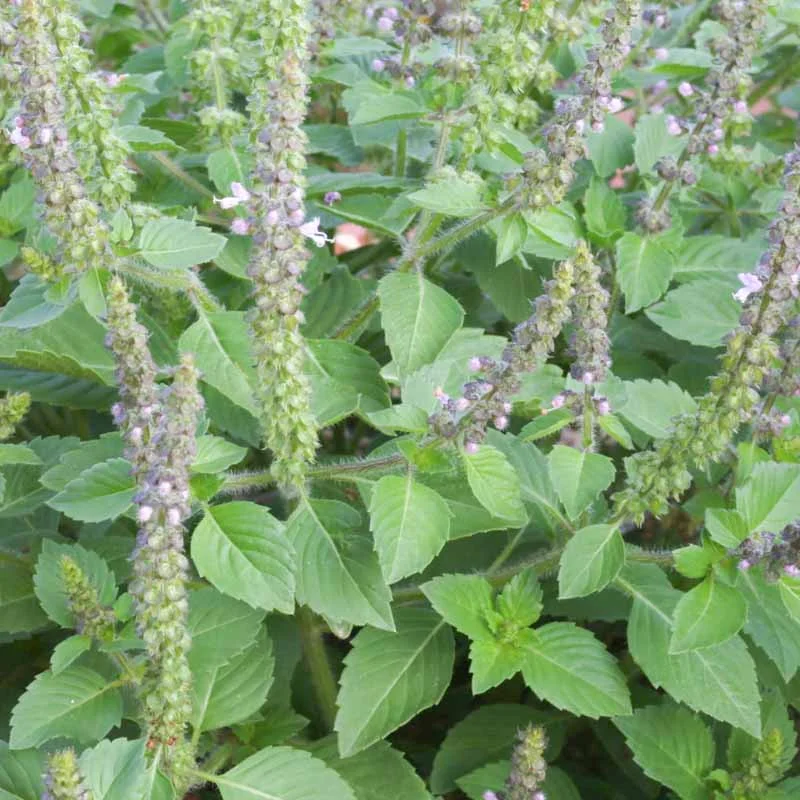
This holy basil, native to Ethiopia and easy to integrate into gardens in temperate zones, has a highly branched habit. Its dark green leaves with serrated edges offer a spicy fragrance and flavor of vanilla, tutti frutti or myrrh.
Discover it on Kokopelli's blog: "Tulsis and other Basilico-molecular Truths to free yourself from the Terror of Pharmacy".
These products may also be of interest to you
in bucket
Sow in trays at temperatures between 18 and 20°C, under a well-lit shelter, 6 weeks before planting. Transplant into individual cups when plants have 4 to 5 leaves, or plant directly into warmed soil, spaced 25 to 30 cm apart. Take care not to over-water to avoid the risk of wilting.
March, April, May, June
June, July, August, September, October, November
in the ground, in pot, in the greenhouse
full sun
medium
potting soil, sandy, gravel, humus
drained, light, reheated
Ocimum bisabolenum
mid-season
200 seeds
Dark green
fragrance, edible
From 30 to 40 cm
From 5 to 15 cm
serrated
Ethiopia
Temperate Tulsi, native to the high plateaus of Ethiopia - where it is known as basobila, besobila or besobela - is part of the diet and therapy of the peoples of this region. Traditionally, in addition to its medicinal uses, it is one of the major components of Berbere spice blends, emblematic of Ethiopian and Eritrean cuisine. Stems, leaves, flowers and seeds, dried and ground into powder, are used as condiments to enhance the preservation of clarified butters, without altering their flavor, but also to enhance all dairy products such as yogurts and cheeses. Ethiopian holy basil's main components include eugenol, estragole, eucalyptol, β-caryophyllene and α-bergamotene. In addition to these molecules, all temperate tulsis have in common their very high bisabolene content. This compound, a sesquiterpene present in the essential oil, can be found in excess of 45% in plants, depending on the ecotype, and thus constitutes their major chemotype. Bisabolene comes in 3 isomers and is characterized by a fruity, balsamic, lemony, myrrh-like, spicy or woody fragrance, which is the source of this species' bewitching, distinctive scent. This specific compound, in its various forms, offers a profusion of medicinal properties: antioxidant, cytotoxic against a large number of cancers, antimicrobial, anti-inflammatory, antimalarial, antihyperglycemic, antihypertensive, hepatoprotective, nephroprotective, cardioprotective, antiepileptic, antiatherosclerotic, etc. All these properties promote healthy functioning of the body. All these properties promote overall body function, stimulate the immune system and combat the side effects of pharmaceutical remedies/poisons, notably by eliminating metallic nanoparticles (graphene, etc.) and other toxins.